
I came across a call to rename Unilorin as Sheikh Alimi University, and I felt it was time we had an honest conversation about this trend. Lately, we’ve seen similar moves…University of Abuja becoming Yakubu Gowon University, the University of Maiduguri renamed Muhammadu Buhari University… what exactly is going on?
I do not doubt the good intentions of the proponents or the decision-makers behind these changes. But some crucial points are being missed, perhaps because their advisers are not telling them the whole story.
A university is a union of scholars, a space where minds come together to form an intellectual milieu. This is why, in Arabic, a university is called jāmiʿa: a place that gathers people. The Latin root universus means “whole” or “entire.” A university, then, is almost a world of its own. It is an institution of higher learning where people live, think, and produce knowledge.
When a university is named after a city, it markets that city as a centre of knowledge. In this place, people converge to do science, the humanities, and serious intellectual work. Thus, outside Nigeria, when the name of my state capital (Ibadan) comes up, very few people know it is the largest city in the country or the capital of Oyo State. But almost everyone knows it as a home of African scholarship. Why? Because of the great University of Ibadan (enjoy this small moment of praise, smh). UI is a pride of humanities scholarship, and it is known for its rich collections of pre-colonial manuscripts.
Now imagine that tomorrow UI becomes Bola Ige University or Rashidi Ladoja University. With our own hands, we would be demarketing an image of the city that took decades to build.
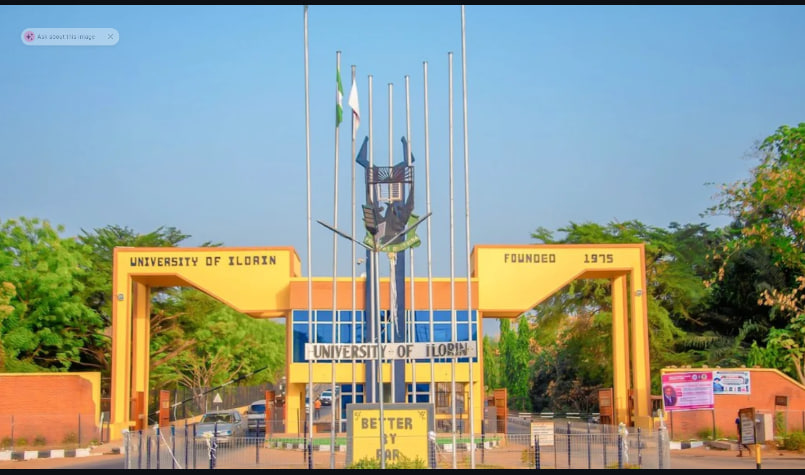
Personally, since leaving Unilorin, only two things always remind me of Ilorin as a city. One is Adam Abdullah al-Ilory, and the other is the University of Ilorin.
In short, these names exist to promote the image and intellectual prestige of cities… but we are steadily stripping them away from some of them.
The one that pains me the most is the renaming of the University of Maiduguri after the late President Buhari (may Allah have mercy on him). Maiduguri is a city that was terrorised for years by Boko Haram. The group sought to prove, through violence, that “boko” is haram. Schools were attacked, learning became difficult, and fear reigned. Yet the people of Maiduguri stood firm in their belief in knowledge. One of the strongest testimonies to this resilience is the university, which is also among the foremost second-generation universities in the country. In its own quiet way, the university declared that boko is halal to the city.
And then we casually erased that symbolism.
Think of Wuhan, where COVID-19 originated. It was placed under a harsh global spotlight. Yet today, if you Google “Wuhan” (at least from my end), one of the first suggestions you see is Wuhan University, which is a highly ranked institution by the way. But why should I Google Maiduguri and not immediately encounter its great university?
Over a thousand years later, when I meet someone from Basra or Baghdad, the first thing that comes to my mind is not politics, or even empires—it is the linguistic schools of those cities. Baghdad, in particular, is remembered not first for the Abbasids or even Bayt al-Ḥikmah, but for the Baghdad School, which is named after it.
Please, let us end this renaming obsession. We should not deprive our cities of their cultural and intellectual emblems. Yes, it is good to commemorate individuals of merit, but there are many ways to do so: highways, national libraries, stadiums, and markets. But not universities that are already named after cities.
Even monarchies understand this. I cannot imagine King Charles passing away tomorrow and the University of London being renamed after him.
And to end bluntly: if you truly believe an individual has more glory than the city itself, then go ahead and strip the city’s name from its university.
 Ifeoluwa Siddiq Oyelami